 FeQSoft
Artificial intelligence can produce a draft, headline suggestions and a summary quickly. That alone does not make a company blog good. Content gains its value not from the number of sentences, but from whether it helps with a real decision, includes first-hand experience and reflects the way the company thinks. If every article repeats the same general advice, readers sense the distance even when the grammar is flawless.
AI is therefore better used as a preparation and editing tool than as a substitute for an author. It can help organise interview notes, group customer questions, generate several headline options or provide a checklist. The business, however, must supply the raw material: real cases, recurring mistakes, its own method, decision criteria and details that cannot be found on every competitor’s website.
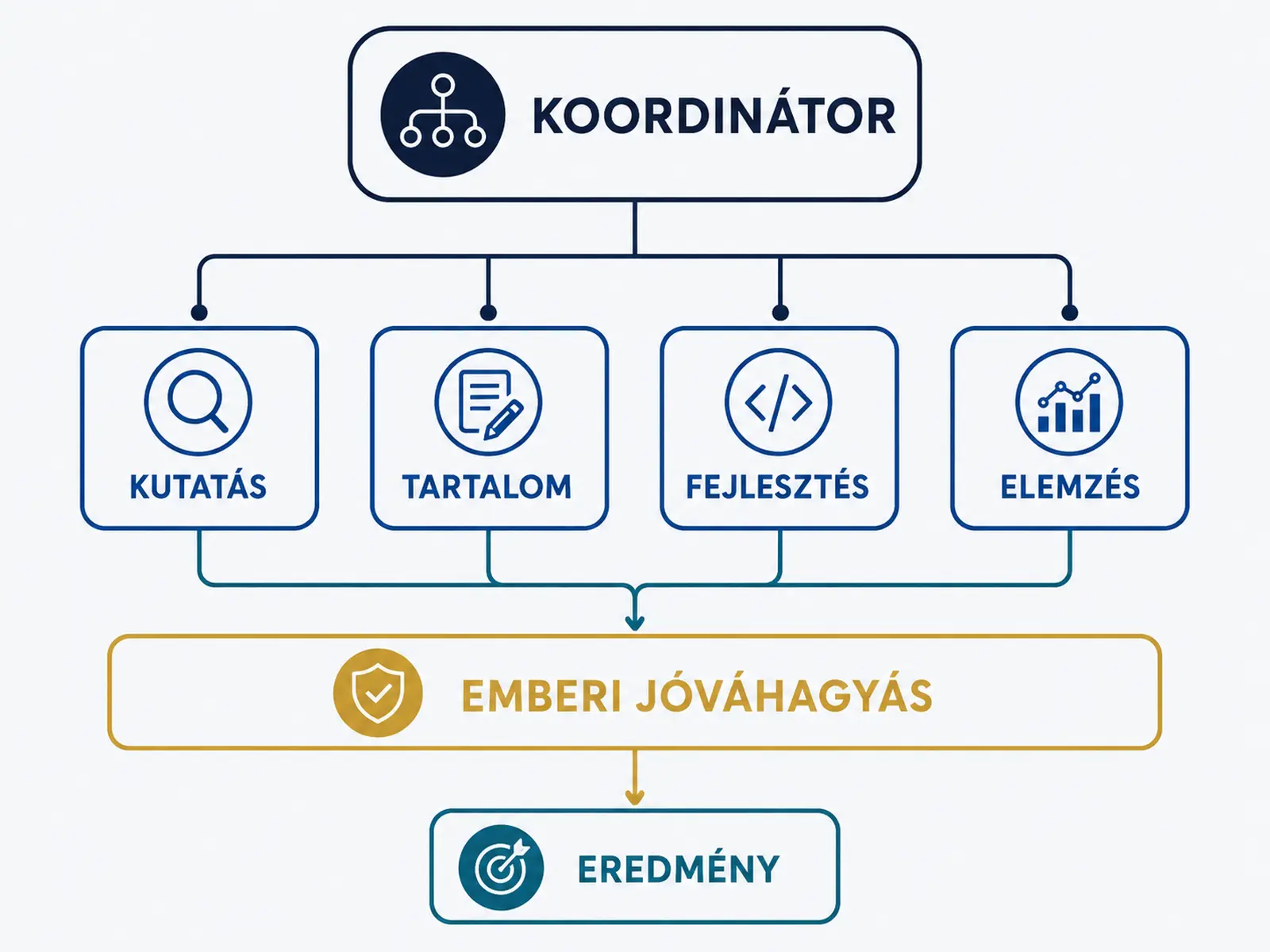
A useful article brief and editorial framework
A useful article brief answers four questions. Who is the reader? In what situation are they looking for this topic? What should they understand by the end? What should their next natural step be? Only then should the article’s central point and structure follow. Without a point of view of its own, AI can easily produce safe but bland generalities. With a clear perspective, it can speed up research and editing without taking over professional responsibility.
Credibility requires human review. Names, figures, legal claims and specialist statements must be checked against sources. Remove unsubstantiated successes, unnatural turns of phrase and exaggerated promises. In Hungarian writing, mechanical headline stacking, too many colons and paragraphs built to the same rhythm are especially noticeable. Good editing restores the variety of natural speech.

Connecting content to the wider marketing system
Content should not be built solely around search keywords. Connect it to service pages, frequently asked questions, sales conversations and email updates. One strong article can become a short video, a management summary or a social post, but the emphasis must be reconsidered for each format. Straight copying rarely works.

What should the saved time be used for?
AI’s greatest benefit is not that it can produce an unlimited volume of text. Rather, it can free time for more valuable work: understanding customers, recording the company’s own experience and sharpening ideas. A business builds strong content when AI makes it faster without making it give up its own voice or the final human decision.
One useful editorial rule is to include at least one element in every article that only that business could have written: an observation of its own, a recurring customer question or a decision-making method. Before publication, have someone read the text aloud. Anything that sounds alien, cumbersome or suspiciously polished in speech is usually worth making simpler and more personal on the page too.
Do not judge quality by the number of articles published each week. It matters more whether relevant visitors continue reading, return and ask specific professional questions. Those are signs that an article is building genuine trust.